We compare Minnesota's top-rated insurance companies to find you strong coverage at a fair price. One local team handles your personal and business insurance.

Most renters assume their landlord's insurance has them covered. It doesn't. Your landlord's policy protects the building itself: the walls, the roof, the plumbing. Everything you own inside that building? That's entirely on you. And "everything you own" adds up fast. A laptop, a couch, a closet full of clothes, kitchen appliances, maybe a bike: most people are sitting on $20,000 to $50,000 worth of personal property without realizing it.
What renters insurance actually covers breaks down into a few distinct categories: personal property (including belongings away from home), personal liability, loss of use when your place becomes uninhabitable, and medical payments to others. What it explicitly does not cover is damage to the building you're renting. That's your landlord's responsibility, and confusing the two is one of the most common mistakes renters make. The surprising part? Only about 37% of renters carry insurance, compared to 95% of homeowners. That gap leaves millions of people one kitchen fire or burst pipe away from replacing everything out of pocket. Here's what a renters policy actually does for you, section by section, so you can make a genuinely informed decision.
The Basics of Personal Property Coverage
AYour personal property coverage is the core of any renters insurance policy. It pays to replace or reimburse you for belongings damaged or destroyed by covered events, which typically include fire, smoke, theft, vandalism, windstorms, water damage from burst pipes, and a handful of other named perils. Notice the phrase "named perils": standard renters policies don't cover everything. Floods and earthquakes, for example, are almost always excluded and require separate policies.
Protecting Your Belongings Inside the Apartment
Walk through your apartment and mentally tally what you see. Your TV, furniture, clothing, dishes, electronics, books, decor: it all counts. Most policies let you choose a coverage limit (commonly $15,000 to $50,000), and you'll want to pick a number that actually reflects what you own. A quick home inventory, even just photos on your phone room by room, makes this estimate far more accurate and speeds up any future claim. One thing people overlook: coverage limits sometimes apply per-item categories. Jewelry, for instance, might be capped at $1,500 unless you add a rider or scheduled endorsement for a specific piece.
Coverage for Items Stolen from Your Car or While Traveling
Here's where renters insurance gets surprisingly useful. Your policy doesn't just protect belongings inside your apartment: it follows them. If your laptop gets stolen from your car at the grocery store, or someone swipes your luggage during a trip, your renters insurance can cover the loss. This "off-premises" coverage typically applies at a percentage of your total personal property limit (often 10%), but it's a benefit most policyholders don't even know they have. For Minnesota renters who travel for work or take weekend trips up north, this is real, practical protection.
Actual Cash Value vs. Replacement Cost Coverage
This distinction matters more than almost anything else on your policy. Actual cash value (ACV) pays you what your belongings were worth at the time of loss, factoring in depreciation. That three-year-old laptop you paid $1,200 for? ACV might give you $400. Replacement cost coverage, on the other hand, pays what it costs to buy a comparable new item. The premium difference between ACV and replacement cost is usually only a few dollars per month, and at an agency like Variant Insurance Group, an agent can show you exactly how those numbers compare across multiple carriers so you're not guessing.
Personal Liability and Medical Payments to Others
Personal liability coverage is the part of renters insurance that protects your finances when someone else gets hurt or their property gets damaged because of something you did, or something that happened in your rental. Most standard policies include $100,000 in liability coverage, though you can increase that to $300,000 or $500,000 for a modest bump in premium.
Legal Defense Costs and Settlements
If someone sues you for an incident covered under your policy, your renters insurance pays for your legal defense: attorney fees, court costs, and any settlement or judgment up to your policy limit. This applies whether the claim has merit or not. Say your dog bites a neighbor, or a guest trips over a rug and breaks their wrist. The legal bills alone from a lawsuit can run into tens of thousands of dollars, even before any settlement. Your liability coverage handles that so your savings account doesn't have to.
Accidental Injuries to Guests
Separate from liability, most renters policies include medical payments to others coverage, typically $1,000 to $5,000. This pays for minor medical expenses when a guest is injured at your place, regardless of fault. Your friend slips on your wet kitchen floor and needs an ER visit? Medical payments coverage handles the bill without requiring a lawsuit or a fault determination. It's a small coverage amount, but it prevents small incidents from escalating into big disputes.
Loss of Use: When You Can't Stay at Home
If a covered event, like a fire or major water damage, makes your rental uninhabitable, your policy's loss of use coverage kicks in. This is the benefit that keeps you from sleeping in your car or draining your savings on a hotel while your apartment gets repaired.
Additional Living Expenses (ALE) Explained
ALE covers the difference between your normal living costs and the increased expenses you face while displaced. If your rent is $1,200 per month but you're now paying $2,000 for a temporary apartment plus eating out because you have no kitchen, ALE covers that extra cost. Most policies set ALE limits as a percentage of your personal property coverage, often 40% to 50%. A $30,000 personal property limit might give you $12,000 to $15,000 in ALE. Keep every receipt during displacement: hotel bills, restaurant meals, laundry costs. Insurers reimburse documented expenses, not estimates.
The Line Between Your Policy and Your Landlord's
This is the single biggest source of confusion in renting, and it trips people up constantly. Your landlord carries insurance on the building. You carry insurance on your life inside it. These two policies serve completely different purposes and protect completely different parties.
Why Building Damage Isn't Your Problem
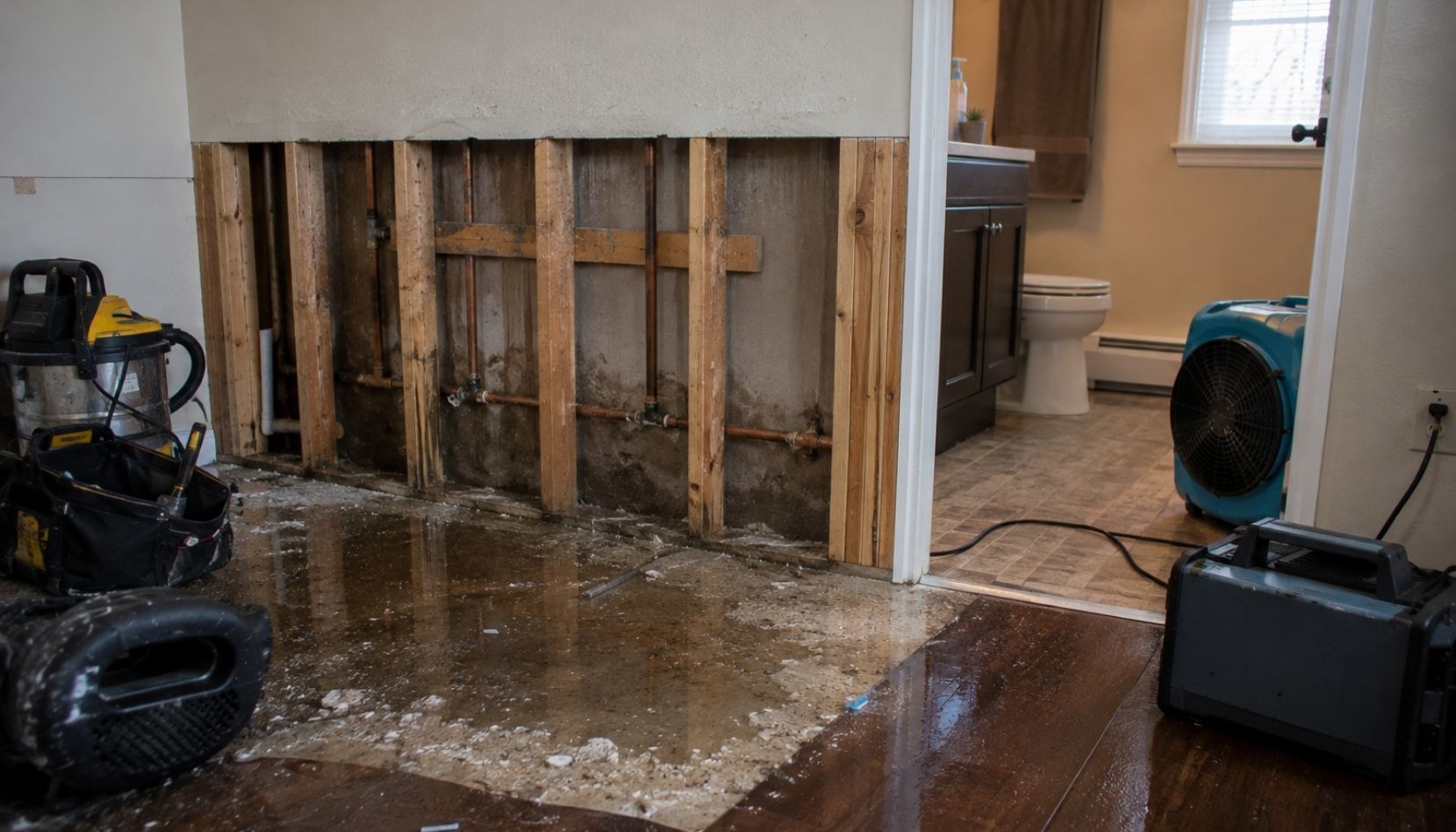
If a tree falls through the roof, a pipe bursts inside the walls, or the building's furnace fails, your landlord's policy covers the structural repair. Your renters policy has zero obligation to pay for building damage. The flip side is also true: your landlord's insurance has zero obligation to replace your belongings destroyed in that same event. When a pipe burst floods your ground-floor apartment and ruins your furniture, your landlord's insurer fixes the pipe and the drywall. Your renters policy replaces your couch, your rug, and your electronics.
Comparison: Renters Insurance vs. Landlord Insurance
| Coverage Area | Renters Insurance | Landlord Insurance |
|---|---|---|
| Building structure | Not covered | Covered |
| Tenant's personal property | Covered | Not covered |
| Liability for tenant's actions | Covered | Not covered |
| Loss of rental income | Not applicable | Often covered |
| Additional living expenses | Covered | Not applicable |
| Appliances (landlord-owned) | Not covered | Covered |
This table makes the split clear. There's no overlap, which is exactly why both policies need to exist. If your landlord requires you to carry renters insurance as a lease condition (increasingly common in Minnesota), this is why.
Common Questions About Renters Coverage
Does renters insurance cover my roommate's stuff? No, unless your roommate is listed on the policy. Most insurers allow you to add a roommate, but each person's belongings are only covered if they're a named insured. Unmarried partners typically need separate policies or must be explicitly added.
What about bed bugs or pest damage? Standard renters policies exclude pest infestations, including bed bugs, rodents, and termites. These are considered maintenance issues, not sudden or accidental losses.
Am I covered if my apartment floods? Not from a standard renters policy. Flood damage from natural flooding events requires a separate flood insurance policy. Water damage from a burst pipe inside your unit, however, is typically covered.
How much does renters insurance cost? In Minnesota, most renters pay between $15 and $30 per month for a solid policy. The exact cost depends on your coverage limits, deductible, location, and claims history. Working with an independent agency like Variant Insurance Group lets you compare quotes from multiple carriers in one conversation.
Does my policy cover damage I cause to the apartment itself? Your liability coverage may help if you accidentally damage the rental unit, like starting a kitchen fire. But it depends on the specifics of the incident and your policy terms. Intentional damage or neglect is never covered.
Can I get renters insurance if I have a dog? Usually, yes, but some breeds are excluded by certain carriers. An independent agent can identify which companies will cover your specific breed without charging a surcharge or adding exclusions.
Before You Buy a Policy
Renters insurance is one of the most straightforward and affordable types of coverage you can carry. For roughly the cost of a streaming subscription, you're protecting tens of thousands of dollars in belongings, shielding yourself from liability claims that could follow you for years, and ensuring you have somewhere to stay if disaster displaces you.
The key decisions are simple: choose replacement cost over actual cash value, pick a personal property limit that reflects what you actually own, and consider whether your liability limit should be higher than the default $100,000. If you have expensive jewelry, instruments, or collectibles, ask about scheduled personal property endorsements.
An independent agency can compare options across multiple insurers to find the right balance of price and protection for your situation. Variant Insurance Group does this for Minnesota renters every day, shopping carriers side by side so you get a policy that fits rather than one that's simply available. Don't wait for a theft or a fire to find out you're uninsured. A 15-minute conversation with a local agent is all it takes to close the gap.

About the Author
Charlie Brookins
Founder & Agent/Owner, Variant Insurance Group
I'm Charlie Brookins, founder and owner of Variant Insurance Group. I built this agency on one idea: local people and businesses deserve honest advice and coverage that fits their real life. As an independent agent in Maple Plain, I shop many of Minnesota's top-rated carriers to find the right protection for your home, auto, life, and business, and I stay with you through every claim and change. My goal is simple: give you straight answers and coverage you can trust.
Recent Posts