


We compare Minnesota's top-rated insurance companies to find you strong coverage at a fair price. One local team handles your personal and business insurance.

Electrical Contractor Insurance


Variant Insurance Group is a licensed independent insurance agency serving Minnesota families and businesses.

From our office in Maple Plain, our team works with many of Minnesota's top-rated carriers so your home, auto, life, and business coverage fits your real needs. We serve families and businesses across Minnesota.

04

Before You Buy a Policy

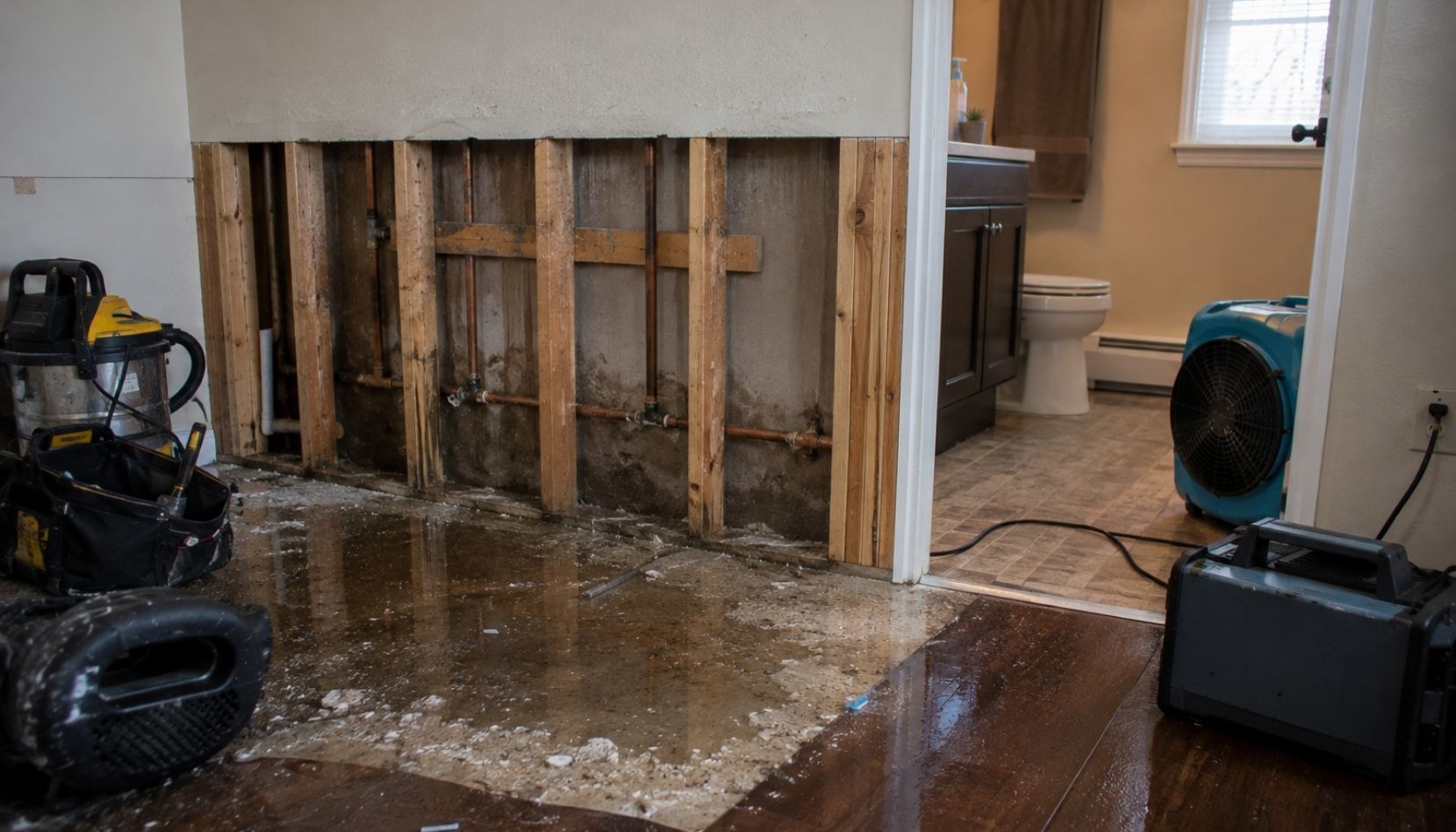
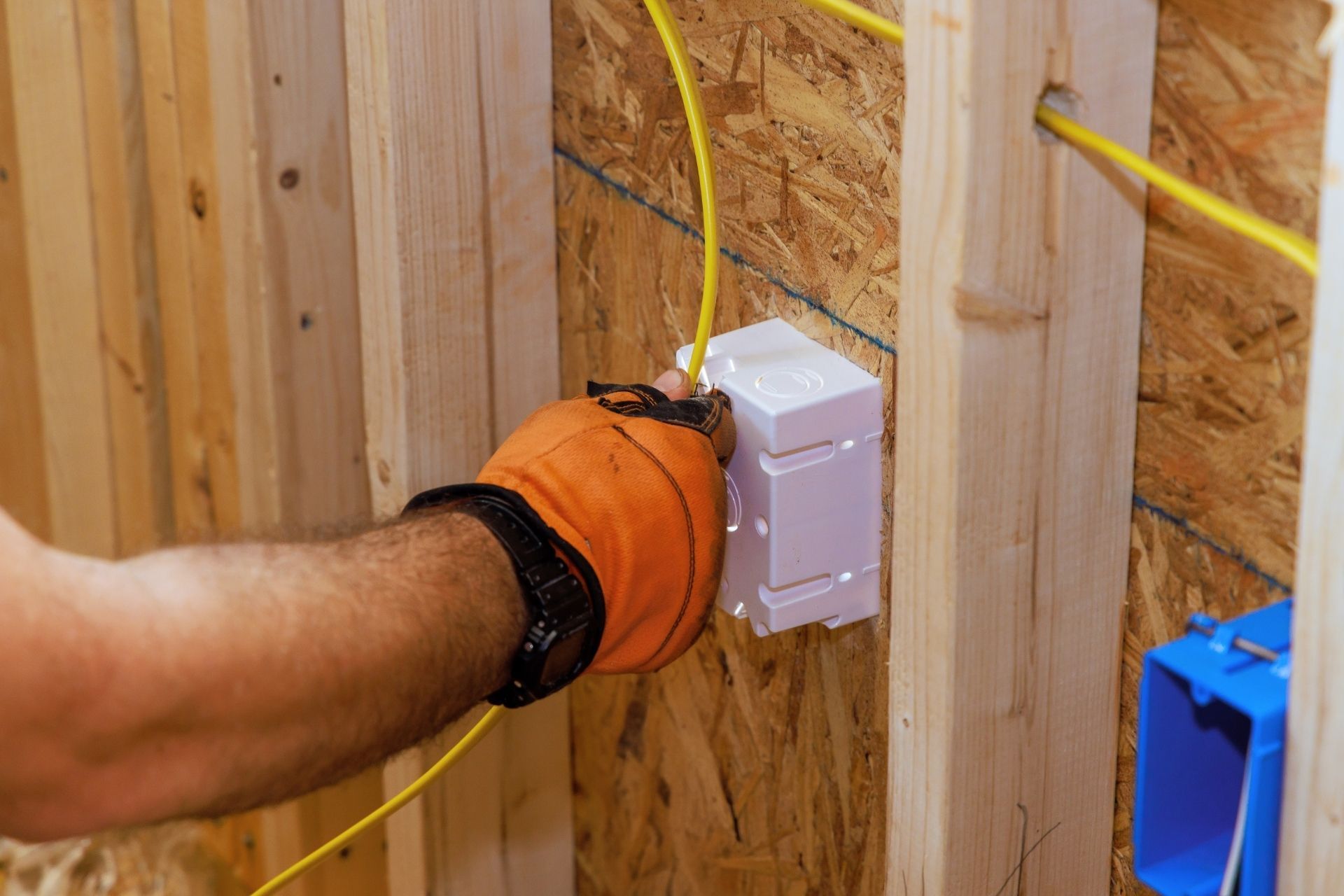
A single loose connection behind a breaker panel can smolder for weeks before igniting a wall cavity at 2 a.m. on a Tuesday. By the time the fire department arrives, the homeowner's insurance carrier is already looking for someone to blame, and your name is on the permit. Electrical contractor insurance exists precisely for moments like these: fires traced to completed work, arc flash injuries that leave workers with life-altering burns, and panel upgrades that go sideways. Understanding how each coverage part responds to these real-world scenarios is the difference between surviving a claim and losing your business. This guide breaks down completed operations liability, arc flash exposure, panel upgrade risks, tools and equipment protection, and how low-voltage classification changes your insurance profile. If you're an electrician running a crew in Minnesota or anywhere else, the specifics here matter more than any generic overview you've read before.

Understanding Completed Operations: When a Fire Occurs After the Job

Most electricians know they need general liability insurance. Fewer understand how the policy actually splits its coverage into two distinct triggers, and that split determines whether you're protected when a fire breaks out months after you've packed up your van.

The Difference Between Premises and Completed Operations

Your general liability policy has two main coverage territories. Premises/operations covers injuries or damage that happen while you're actively working on a job site: a homeowner trips over your extension cord, or your apprentice drops a tool through a skylight. Completed operations kicks in after you've finished the work and left. That fire traced to a junction box you wired six months ago? That's a completed operations claim.


Here's where contractors get tripped up: some policies allow you to drop completed operations coverage to save on premium. This is a terrible idea for electricians. Electrical defects can take months or even years to manifest. A connection that passes inspection today can loosen from thermal cycling and eventually arc. If you've dropped completed operations coverage, you're personally on the hook for the resulting damage. General liability for electrical contractors typically includes completed operations, but always confirm the coverage is active and review the aggregate limit.

How General Liability Responds to Property Damage Claims

When a fire is traced to your work, the homeowner's insurer pays the claim and then subrogate against you, meaning they come after your insurance to recover what they paid. Your general liability policy responds by covering the property damage to the home and its contents, defense costs, and any additional living expenses the homeowner incurred. The key exclusion to watch for is "damage to your work," which we'll cover later. Defense costs alone in a fire claim can exceed $50,000 before anyone talks about settlements, so carrying adequate limits (most contractors should carry at least $1 million per occurrence) isn't optional.

Arc Flash and High-Voltage Injury Exposure

Arc flash incidents produce temperatures that can exceed 35,000 degrees Fahrenheit, hotter than the surface of the sun. Up to 80% of OSHA-reported electrical injuries involve thermal burns from arc flashes rather than direct electric shock. These injuries create enormous financial exposure for contractors.

Workers' Compensation vs. General Liability for Injury Claims

If your employee suffers an arc flash burn, workers' compensation is the primary coverage. It pays medical bills, lost wages, and rehabilitation costs regardless of fault. Minnesota requires workers' comp for virtually all employers, and electrical work carries some of the highest classification rates because of the injury severity potential.


But what if a third party is injured: a general contractor's laborer standing near your work, or a building occupant? That's a general liability claim. The injured party isn't limited to workers' comp benefits and can sue for full damages, including pain and suffering. A severe arc flash burn requiring skin grafts and months of recovery can easily generate a claim in the $500,000 to $2 million range.

The Role of Excess Liability in Catastrophic Injury Events

A $1 million general liability policy might not be enough for a catastrophic arc flash injury. Excess liability (umbrella) policies sit on top of your general liability and workers' comp, providing additional limits. For electrical contractors working on commercial or industrial projects, carrying $2 million to $5 million in umbrella coverage is common. The 2026 construction insurance market has seen umbrella pricing stabilize somewhat after several hard years, making this a reasonable investment. An independent agency like Variant Insurance Group can compare umbrella options across multiple carriers to find pricing that actually fits your revenue and risk profile.

Liability Risks in Panel and Service Upgrades

Panel swaps and service upgrades are bread-and-butter work for residential electricians, but they carry specific insurance exposures that differ from new construction.

Professional Liability for System Design and Load Calculations

If you size a panel incorrectly and the homeowner's new HVAC system overloads the service, that's not just a callback: it's a potential professional liability claim. Standard general liability policies cover bodily injury and property damage, but they don't cover claims arising from errors in your professional judgment or design work. Professional liability (sometimes called errors and omissions) fills this gap.


This matters most when you're doing load calculations, specifying equipment, or designing electrical systems rather than just installing what an engineer specified. Minnesota electricians who take on design-build residential work should seriously consider adding professional liability coverage. The premium is typically modest relative to the exposure: often $500 to $1,500 annually for a small shop.

Damage to Your Own Work: Exclusions You Need to Know

Every standard general liability policy contains a "your work" exclusion. If a panel you installed fails and needs to be replaced, the policy won't pay to redo your own work. It will cover resulting damage to other property: if the failed panel caused a fire that damaged the kitchen, the kitchen damage is covered, but replacing the panel itself is not.


There's an important exception. If a subcontractor performed the work on your behalf, the "your work" exclusion often doesn't apply. This is why the subcontractor exception matters for shops that use sub crews. Review your specific policy language with your agent because these exclusions vary by carrier.

Protecting Your Gear: Tools and Test Equipment Coverage

A fully stocked electrician's van can carry $15,000 to $40,000 worth of tools and test equipment. Your commercial auto policy covers the vehicle, but it typically excludes the contents. Your general liability policy doesn't cover your own property at all. This is a coverage gap that catches contractors off guard after a theft or vehicle fire.

Inland Marine Insurance for Mobile Equipment

Inland marine insurance is the standard solution for protecting tools, equipment, and materials in transit or stored at job sites. Despite the nautical name, it has nothing to do with boats: it covers movable property. A good inland marine policy for an electrical contractor covers hand tools, power tools, meters, oscilloscopes, thermal imaging cameras, wire and materials on the truck, and rented or borrowed equipment.


Policies can be written on a scheduled basis (listing specific items) or a blanket basis (covering everything up to a limit). For most electricians, a blanket policy with a $25,000 to $50,000 limit is simpler and avoids the hassle of updating schedules every time you buy a new tool. Protecting contractor tools and equipment requires matching the policy to how you actually store and transport your gear.

Replacement Cost vs. Actual Cash Value for Specialized Testers

This distinction matters more than most contractors realize. An actual cash value policy pays what your five-year-old Fluke meter is worth today (depreciated), not what it costs to replace. A replacement cost policy pays what a new equivalent meter costs. For a $3,000 power quality analyzer that's three years old, the difference between actual cash value and replacement cost could be $1,500 or more.


Replacement cost coverage costs slightly more in premium, but for specialized test equipment, it's worth every dollar. At Variant Insurance Group, we frequently see electricians underinsured on their equipment simply because they chose the cheaper valuation option without understanding the payout difference.

Comparison: General Liability vs. Professional Liability for Electricians

Feature General Liability Professional Liability
Covers Bodily injury, property damage to others Errors in design, specifications, advice
Trigger Physical harm or damage occurs Financial loss from professional mistake
Example claim Fire from faulty wiring injures occupant Undersized service causes equipment damage
Required by Most GCs and building owners Less commonly required, but critical for design-build
Typical limit $1M per occurrence / $2M aggregate $250K to $1M
Covers defense costs Yes Yes
Covers your own work No (exclusion applies) Depends on policy

General liability for electrical contractors is the foundation, but professional liability fills a gap that general liability explicitly excludes. Most electricians need both if they do any design or specification work.

Common Questions About Electrical Contractor Insurance

Does low-voltage work require the same insurance as high-voltage electrical contracting? Not exactly. Low-voltage contractors (data cabling, fire alarm, security systems) typically qualify for lower classification rates and reduced premiums because the injury and property damage risk is significantly lower. That said, you still need general liability, and many GCs require the same $1 million limits regardless of voltage class.


How much does electrical contractor insurance cost per year? A small electrical shop with two to five employees in Minnesota typically pays between $2,500 and $7,500 annually for a general liability and workers' comp package. High-voltage commercial work, larger crews, and claims history push that number higher.


Will my policy cover a claim if my license was expired at the time of the work? Most policies don't exclude coverage based on license status, but your state licensing board can impose separate penalties. More importantly, working without a valid license can give a plaintiff's attorney ammunition to argue negligence, which complicates your defense.


Do I need separate coverage for my tools if I have a business owners policy? A BOP often includes some equipment coverage, but the limits are usually low (around $5,000 to $10,000). If your tool inventory exceeds that, you need a standalone inland marine policy or an endorsement to increase the BOP equipment limit.


What happens if a subcontractor I hired causes a fire? Your general liability policy may still respond if you're named in the lawsuit, which you almost certainly will be. This is why requiring certificates of insurance from your subs, with your company listed as additional insured, is non-negotiable.

What This Means for Your Business

Electrical work carries risks that most trades simply don't face: fires that ignite months after you leave, arc flash injuries with six-figure medical bills, and professional liability for system design decisions. Each of these exposures maps to a specific insurance coverage, and gaps between those coverages are where contractors get hurt financially.


The most common mistake we see is treating insurance as a single purchase rather than a coordinated program. Your general liability, professional liability, workers' comp, umbrella, and inland marine policies need to work together without overlaps that waste premium or gaps that leave you exposed. An independent agency like Variant Insurance Group can review your full program across multiple carriers, making sure each piece fits your actual operations rather than a generic template.


If you haven't reviewed your coverage in the last 12 months, or if you've added services like panel upgrades or design-build work, now is the time. Pull out your dec pages, check your completed operations limits, verify your tool values, and confirm your classification codes are accurate. One phone call to your agent could save you from a six-figure mistake.

By: Charlie Brookins

Agent/Owner, Variant Insurance Group

Variant Insurance Group is a licensed independent insurance agency serving Minnesota families and businesses.

From our office in Maple Plain, our team works with many of Minnesota's top-rated carriers so your home, auto, life, and business coverage fits your real needs. We serve families and businesses across Minnesota.

About the Author

Charlie Brookins

Founder & Agent/Owner, Variant Insurance Group

I'm Charlie Brookins, founder and owner of Variant Insurance Group. I built this agency on one idea: local people and businesses deserve honest advice and coverage that fits their real life. As an independent agent in Maple Plain, I shop many of Minnesota's top-rated carriers to find the right protection for your home, auto, life, and business, and I stay with you through every claim and change. My goal is simple: give you straight answers and coverage you can trust.

One agent, many carriers

We represent many top-rated insurance companies. You get more coverage choices, better pricing, and one point of contact for every policy you own.

01

We shop as your life changes

04

New home, new vehicle, or a growing business? We re-shop your coverage across carriers so your protection keeps pace and your rate stays fair.

Personal Insurance

Coverage for your home, auto, and life

Protection for the people and things that matter most, shopped across Minnesota's top-rated carriers.

Auto Insurance

Coverage for your car, truck, or SUV. We compare carriers to protect you on the road at a fair price.

Home Insurance

Protection for your house, your belongings, and your liability. We match you with the right coverage for your home.

Life Insurance

Support for the people who depend on you. We help you compare term and whole life options that fit your budget.

Umbrella Insurance

Extra liability protection above your home and auto limits. A strong safety net for your family and your assets.

Renters Insurance

Coverage for your belongings and liability in a rented home or apartment. Affordable protection with quick setup.

Recreational Vehicle Insurance

Coverage for boats, motorcycles, ATVs, and campers. Enjoy the season with the right protection in place.

One agent, many carriers

We represent many top-rated insurance companies. You get more coverage choices, better pricing, and one point of contact for every policy you own.

01

We shop as your life changes

04

New home, new vehicle, or a growing business? We re-shop your coverage across carriers so your protection keeps pace and your rate stays fair.

Business Insurance

Coverage that protects what you have built

Liability, property, auto, and more, shopped across Minnesota's top-rated commercial carriers.

One agent, many carriers

We represent many top-rated insurance companies. You get more coverage choices, better pricing, and one point of contact for every policy you own.

01

We shop as your life changes

04

New home, new vehicle, or a growing business? We re-shop your coverage across carriers so your protection keeps pace and your rate stays fair.

Industries we serve

Coverage built for your industry

Contractor Insurance

Coverage for Minnesota contractors and the trades — general liability, tools and equipment, property, and workers comp. Protection for the job site and the crew.

Apartment Complex Insurance

Your income depends on the housing you provide, and wind, fire, or flood can interrupt it. Apartment Complex Insurance helps protect your property, your liability if a tenant or worker is injured, and your personal assets.

Brewery Insurance

You have pictured this brewery for years. Whether you just make great beer or serve food and merchandise too, Variant helps Minnesota breweries find the right coverage, from startups to major production facilities.

Our carrier bench

We shop these carriers so you don't have to

Plus specialty market access through Burns & Wilcox, CRC Group, Amwins, RPS and US Assure.

One agent, many carriers

We represent many top-rated insurance companies. You get more coverage choices, better pricing, and one point of contact for every policy you own.

01

We shop as your life changes

04

New home, new vehicle, or a growing business? We re-shop your coverage across carriers so your protection keeps pace and your rate stays fair.

Four steps, one real person from start to finish.

30 seconds — name, email, phone. Or just call. We’ll ask the right questions from there.

4

We stay in your corner

See all the industries we cover →

In their words

What our clients say

Frequently asked questions

Your insurance questions, answered

These are the questions Minnesota families and businesses ask us most. If you don't see yours here, call or message us — a real local agent is glad to help.

  • What does an independent insurance agency do?

    An independent agency represents many insurance companies instead of just one. We shop your coverage across those carriers and compare protection and price for you.


    That means more choices and one local team for every policy. You get honest guidance and a single point of contact you can trust.

  • How do you find me the best rate?

    We start with your details and what you need to protect. Then we compare quotes from many top-rated carriers side by side.


    We explain the coverage and the cost in plain terms, so the choice is clear. As your life changes, we re-shop your policies to keep your rate fair.

  • Can you handle both my personal and business insurance

    Yes. We cover your home, auto, and life along with your workers comp, commercial property, and commercial auto.


    One team manages it all, so you make one call for every policy. That saves you time and keeps your coverage consistent.

  • What should I do if I need to file a claim?

    Call us or contact your carrier as soon as it is safe to do so. Gather photos, notes, and any details about what happened.


    Our local team walks you through each step and follows up with the carrier. We stay in your corner until the claim is resolved.

  • Which areas do you serve?

    Our office is in Maple Plain, Minnesota, and we serve families and businesses across the state. You can visit us, call, or email.


    We know the local area and the coverage Minnesota requires. [CONFIRM: list any additional licensed states.]

  • How do I get started?

    Request a quote online or call 763-333-2533. Share a few details and we take it from there.


    We shop your coverage, compare your options, and explain what fits. There is no pressure and no obligation to buy.

One agent, many carriers

We represent many top-rated insurance companies. You get more coverage choices, better pricing, and one point of contact for every policy you own.

01

We shop as your life changes

04

New home, new vehicle, or a growing business? We re-shop your coverage across carriers so your protection keeps pace and your rate stays fair.

See all the industries we cover →

Named an Auto-Owners Sapphire Agency — a distinction reserved for a select group of the carrier's top-performing independent agencies.

From our blog

Insurance tips for Minnesota

Practical guides on coverage for your home, auto, and business.

28 August 2026
Learn what an HOA master policy covers, bare walls vs. all-in coverage, where HO-6 insurance applies, and how loss assessments affect owners.
28 August 2026
Learn what a Business Owners Policy covers, including property, liability, business income, eligibility rules, and common coverage gaps.
28 August 2026
Learn who pays when pipes freeze in a rental, how landlord and renters insurance split losses, and when heat maintenance clauses can affect coverage.

763-333-2533

Let's get started

Ready for clearly different insurance?

Get a free quote and see how much a local, independent agency can do for you. No pressure, no obligation.

763-333-2533

info@variantinsurance.com

5159 Main Street East #200, Maple Plain, MN 55359

 Monday–Friday, 8:30am–5:00pm