

We compare Minnesota's top-rated insurance companies to find you strong coverage at a fair price. One local team handles your personal and business insurance.
Variant Insurance Group is a licensed independent insurance agency serving Minnesota families and businesses.
From our office in Maple Plain, our team works with many of Minnesota's top-rated carriers so your home, auto, life, and business coverage fits your real needs. We serve families and businesses across Minnesota.
04
Minnesota's insurance market has been brutal for community associations over the past two years. Between escalating hail claims, carrier pullbacks, and a 34% increase in homeowners insurance premiums - the largest spike of any state in the country - HOA boards are scrambling to understand what coverage they actually need and what the law requires. The stakes are real: a board that carries the wrong master policy or misunderstands its deductible structure can expose individual unit owners to five-figure special assessments after a single storm.
This is a topic where getting the details right matters enormously, and where most associations are flying blind. Minnesota's Common Interest Ownership Act, codified under Chapter 515B, sets specific insurance mandates that go well beyond what a generic commercial property policy covers. Boards that treat insurance as a routine renewal are making a costly mistake. The interplay between statutory requirements, master policy structure, hail deductibles, and director liability creates a web of obligations that demands careful attention.
Whether you're a newly elected board member trying to figure out what your association's policy actually covers, or a property manager preparing for a contentious renewal season, the information below breaks down what Minnesota law requires, where the common coverage gaps hide, and how to protect both the association and its members.
Understanding the Minnesota Common Interest Ownership Act (MCIOA)
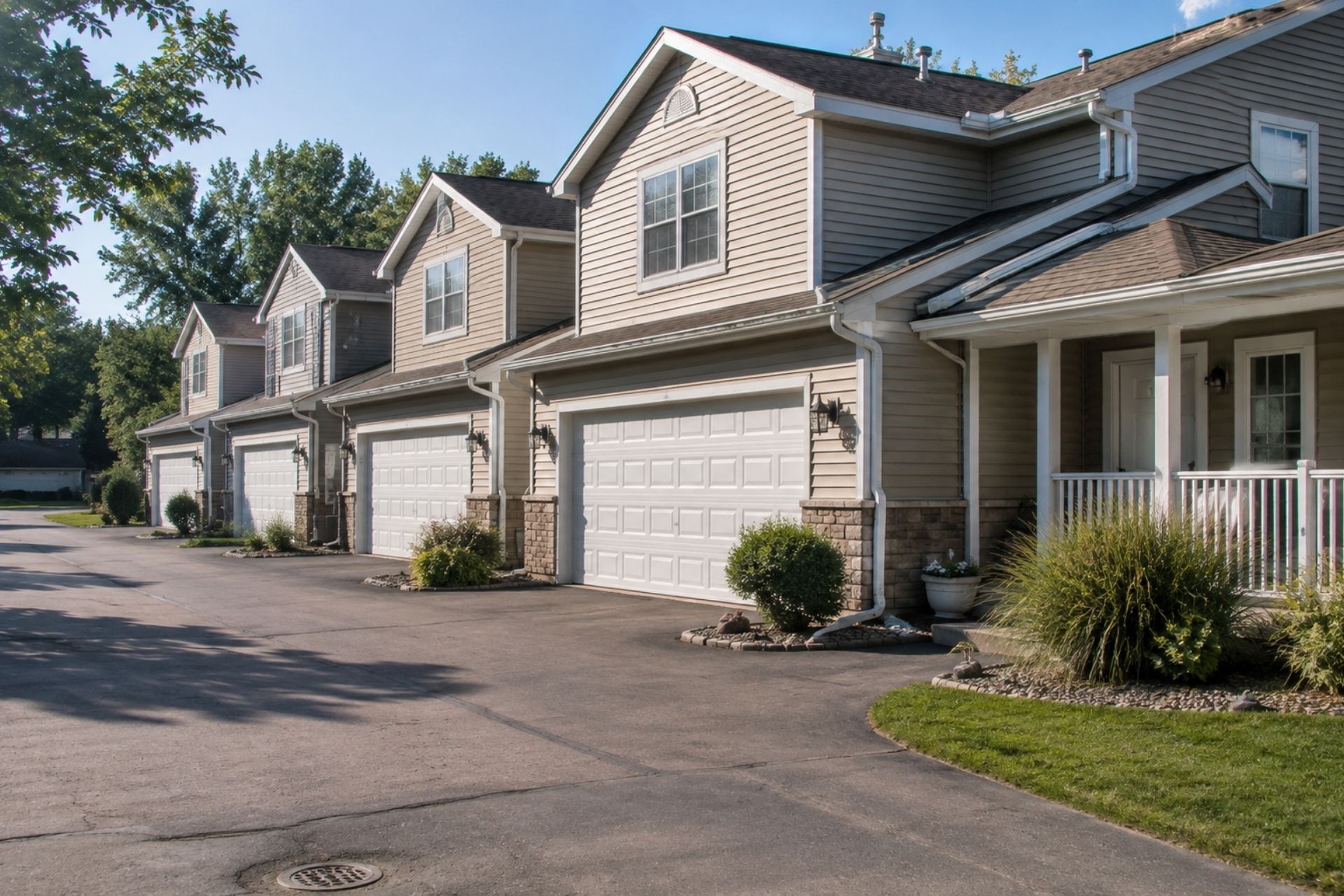
The MCIOA governs the creation, management, and operation of common interest communities across Minnesota, including condominiums, townhome associations, and planned communities. It's not a suggestion box: it's binding law, and boards that ignore its insurance provisions face personal liability exposure. The statute was updated through recent legislative sessions to address emerging issues in common interest communities, including insurance adequacy.
One thing boards often miss is that MCIOA applies differently depending on when the community was created. Associations established after June 1, 1994, generally fall under the full scope of Chapter 515B, while older communities may be governed by prior statutes unless they've opted in. This distinction affects everything from voting procedures to insurance mandates.
The Scope of Chapter 515B Compliance
Chapter 515B touches nearly every operational aspect of a common interest community. From governance procedures and financial disclosures to reserve funding and insurance requirements, the statute creates a comprehensive framework. For insurance purposes, the critical sections are found in 515B.3-113 and 515B.3-114, which spell out the minimum coverages an association must carry.
Compliance isn't optional, and ignorance isn't a defense. Boards that fail to maintain adequate insurance under 515B can be held personally liable for resulting losses. This is especially relevant given that HOA owners have specific rights under 515B that they can enforce against a non-compliant board, including the right to demand proper insurance documentation.
Statutory Insurance Requirements for HOAs
Under MCIOA, associations must maintain property insurance covering the common elements and, in most condominium structures, the units themselves (excluding personal property and improvements made by individual owners). The statute requires replacement cost coverage, not actual cash value, which is a critical distinction that affects claim payouts significantly.
The law also mandates general liability coverage and, for associations managing significant funds, fidelity bonds or crime insurance to protect against employee or board member theft. These aren't "nice to have" policies: they're legal requirements. Boards should review their governing documents alongside Chapter 515B, because declarations often impose insurance obligations that exceed the statutory minimum.

Master Policy Essentials for Minnesota Associations
The master policy is the backbone of an HOA's insurance program. It covers the physical structures, common areas, and shared infrastructure that individual unit owner policies don't touch. Getting this policy right is the single most important insurance decision a board makes each year.
A common mistake is assuming the master policy covers everything between the exterior walls. Coverage scope depends heavily on the association's governing documents and the type of master policy purchased. "Bare walls" coverage, for example, insures only the structural shell, leaving unit owners responsible for everything inside, including drywall, flooring, cabinets, and fixtures. An "all-in" or "single entity" policy covers the unit as originally built, shifting more responsibility to the association's policy.
Property Coverage and Replacement Cost Valuations
MCIOA requires replacement cost coverage, which means the association needs an accurate, up-to-date appraisal of its insurable value. This is where many associations fall short. A property appraisal conducted five years ago is essentially useless in 2026, given that construction costs have risen 25-40% in many Minnesota markets since 2020.
Underinsurance is the most common coverage gap we see in community associations. If your buildings are insured for $8 million but would cost $11 million to rebuild, you're looking at a coinsurance penalty that could reduce every claim payout. Boards should commission a professional replacement cost appraisal every three to five years and update insured values annually based on construction cost indices. An independent agency like Variant Insurance Group can help coordinate these appraisals and ensure the master policy reflects current rebuilding costs.
General Liability and Fidelity Bond Mandates
General liability coverage protects the association when someone is injured on common property: a slip on an icy sidewalk, a fall in the pool area, or a trip on a damaged stairway. MCIOA requires this coverage, and most associations carry $1 million per occurrence with a $2 million aggregate, though larger communities often need higher limits or an umbrella policy.
Fidelity bonds protect the association's funds from theft or misappropriation by board members, employees, or management company staff. The typical recommendation is coverage equal to at least three months of assessments plus reserves. For a 200-unit association collecting $400 per month with $500,000 in reserves, that means a fidelity bond of at least $740,000. This is a fundamental component of HOA insurance coverage that boards sometimes overlook because it feels like an unlikely risk, until it isn't.

Navigating Hail Deductibles and Storm Damage Claims
Minnesota's hail exposure is among the worst in the country, and insurers have responded by restructuring how they price and deductible storm damage claims. If your association hasn't reviewed its wind and hail deductible structure recently, you might be in for a surprise at claim time.
The shift toward percentage-based deductibles for wind and hail has been the single biggest change in HOA insurance over the past five years. This trend has reshaped how carriers approach roof coverage and hail claims across the state, and boards need to understand the financial implications before a storm hits, not after.
Percentage-Based vs. Flat-Dollar Deductibles
Flat-dollar deductibles are straightforward: if your deductible is $10,000, you pay $10,000 out of pocket regardless of the claim size. Percentage-based deductibles, now standard for wind and hail in Minnesota, work differently. A 5% wind/hail deductible on a property insured for $10 million means a $500,000 deductible for any hail claim.
That number shocks a lot of boards. Some associations have been carrying percentage-based deductibles for years without realizing the actual dollar amount until they file a claim. Boards should calculate the dollar equivalent of their percentage deductible and ensure the association's reserves or special assessment capacity can cover it. The insurance challenges facing Minnesota associations have been a topic of legislative discussion precisely because these deductible structures can create enormous financial strain on communities.
Loss Assessment Coverage for Unit Owners
When the association's deductible exceeds its reserves, the board typically levies a special assessment against unit owners. This is where individual HO-6 policies become critical. Loss assessment coverage, usually available in $1,000 to $50,000 increments on an HO-6 policy, reimburses unit owners for special assessments resulting from covered losses.
Boards should actively encourage unit owners to carry at least $25,000 to $50,000 in loss assessment coverage. A single hail event with a $300,000 deductible spread across 100 units means a $3,000 per-unit assessment, and that's a modest scenario. Associations that proactively communicate this to owners reduce the friction and financial hardship that follow major claims.
Comparison: Basic vs. MCIOA-Compliant Master Policies
| Coverage Element | Basic Commercial Policy | MCIOA-Compliant Master Policy |
|---|---|---|
| Property Valuation | Actual cash value or stated amount | Replacement cost required by statute |
| Unit Interior Coverage | Typically excluded | Depends on declaration (bare walls, single entity, or all-in) |
| General Liability | Often $500K or less | $1M per occurrence / $2M aggregate minimum recommended |
| Fidelity Bond | Rarely included | Required: minimum 3 months assessments plus reserves |
| Wind/Hail Deductible | Flat dollar (varies) | Often percentage-based (1-10% of insured value) |
| Directors & Officers | Not included | Strongly recommended; protects board from personal liability |
| Loss Assessment | Not applicable | Unit owners need separate HO-6 coverage |
The gap between a generic commercial property policy and a properly structured HOA master policy is significant. A basic policy might cover the buildings but miss the statutory requirements that protect both the association and individual owners. Working with an agency that understands Minnesota's specific requirements, like Variant Insurance Group, ensures your master policy actually meets Chapter 515B standards rather than just checking a box.
Common Questions About Minnesota HOA Insurance
Does every Minnesota HOA need to follow Chapter 515B insurance requirements? Most associations created after June 1, 1994, must comply fully. Older associations may be subject to prior statutes unless they've voluntarily adopted 515B. Check your declaration and consult legal counsel to confirm.
Who pays the master policy deductible after a hail claim? This depends on your governing documents. Some declarations assign the deductible to the association as a common expense, while others allocate it to affected unit owners. Review your declaration's insurance and maintenance provisions carefully.
Can the board be sued if insurance coverage is inadequate? Yes. Board members have a fiduciary duty to maintain adequate insurance. Failure to carry required coverages under MCIOA or the governing documents can expose directors to personal liability, which is why D&O insurance is essential.
How often should the association update its property appraisal? Every three to five years at minimum, with annual adjustments for construction cost inflation. Given the cost pressures affecting HOA insurance, accurate valuations are more important than ever.
What's the difference between an HO-6 policy and the master policy? The master policy covers the building structure and common elements. An HO-6 policy covers a unit owner's personal property, interior improvements, personal liability, and loss assessments. Both are necessary: they don't overlap, they complement each other.
Next Steps for Board Members and Managers
Getting HOA insurance right in Minnesota requires more than a quick renewal conversation with your current carrier. Boards should start by pulling their governing documents and comparing the insurance requirements in the declaration against their current master policy. Gaps between what the documents require and what the policy covers represent real financial exposure.
Next, calculate the actual dollar amount of your wind and hail deductible and compare it to your reserve balance. If the deductible exceeds your reserves, you need a plan: either build reserves, adjust the deductible (which will increase premiums), or prepare a special assessment framework in advance.
An independent agency that represents multiple carriers can shop your association's coverage across the market, finding the best combination of pricing and coverage terms rather than being locked into a single insurer's offerings. Variant Insurance Group works with Minnesota associations to review master policies against both MCIOA requirements and governing document obligations, ensuring nothing falls through the cracks. Reach out to discuss your association's specific situation and get a coverage review before your next renewal.
The boards that handle insurance well are the ones that treat it as a year-round governance responsibility, not a once-a-year paperwork exercise. Your community's financial health depends on it.
On this page
Variant Insurance Group is a licensed independent insurance agency serving Minnesota families and businesses.
From our office in Maple Plain, our team works with many of Minnesota's top-rated carriers so your home, auto, life, and business coverage fits your real needs. We serve families and businesses across Minnesota.

About the Author
Charlie Brookins
Founder & Agent/Owner, Variant Insurance Group
I'm Charlie Brookins, founder and owner of Variant Insurance Group. I built this agency on one idea: local people and businesses deserve honest advice and coverage that fits their real life. As an independent agent in Maple Plain, I shop many of Minnesota's top-rated carriers to find the right protection for your home, auto, life, and business, and I stay with you through every claim and change. My goal is simple: give you straight answers and coverage you can trust.
One agent, many carriers
We represent many top-rated insurance companies. You get more coverage choices, better pricing, and one point of contact for every policy you own.
01
We shop as your life changes
04
New home, new vehicle, or a growing business? We re-shop your coverage across carriers so your protection keeps pace and your rate stays fair.

Personal Insurance
Coverage for your home, auto, and life
Protection for the people and things that matter most, shopped across Minnesota's top-rated carriers.
Auto Insurance
Coverage for your car, truck, or SUV. We compare carriers to protect you on the road at a fair price.
Home Insurance
Protection for your house, your belongings, and your liability. We match you with the right coverage for your home.
Life Insurance
Support for the people who depend on you. We help you compare term and whole life options that fit your budget.
Umbrella Insurance
Extra liability protection above your home and auto limits. A strong safety net for your family and your assets.
Renters Insurance
Coverage for your belongings and liability in a rented home or apartment. Affordable protection with quick setup.
Recreational Vehicle Insurance
Coverage for boats, motorcycles, ATVs, and campers. Enjoy the season with the right protection in place.
One agent, many carriers
We represent many top-rated insurance companies. You get more coverage choices, better pricing, and one point of contact for every policy you own.
01
We shop as your life changes
04
New home, new vehicle, or a growing business? We re-shop your coverage across carriers so your protection keeps pace and your rate stays fair.

Business Insurance
Coverage that protects what you have built
Liability, property, auto, and more, shopped across Minnesota's top-rated commercial carriers.
Workers Compensation
Coverage for employee injuries and lost wages. We help Minnesota employers meet state rules and protect their crew.
Commercial General Liability
Protection against third-party injury and property damage claims. Core coverage for most Minnesota businesses.
Commercial Property
Coverage for your building, equipment, and inventory. We protect the physical assets your business depends on.
Commercial Auto
Coverage for vehicles your business owns and drives. We match trucks, vans, and fleets with the right protection.
Commercial Umbrella
Extra liability limits above your other business policies. Added protection for larger claims and contracts.
Commercial Professional Liability
Coverage for your building, equipment, and inventory. We protect the physical assets your business depends on.

One agent, many carriers
We represent many top-rated insurance companies. You get more coverage choices, better pricing, and one point of contact for every policy you own.
01
We shop as your life changes
04
New home, new vehicle, or a growing business? We re-shop your coverage across carriers so your protection keeps pace and your rate stays fair.
Industries we serve
Coverage built for your industry

Contractor Insurance
Coverage for Minnesota contractors and the trades — general liability, tools and equipment, property, and workers comp. Protection for the job site and the crew.

Apartment Complex Insurance
Your income depends on the housing you provide, and wind, fire, or flood can interrupt it. Apartment Complex Insurance helps protect your property, your liability if a tenant or worker is injured, and your personal assets.

Brewery Insurance
You have pictured this brewery for years. Whether you just make great beer or serve food and merchandise too, Variant helps Minnesota breweries find the right coverage, from startups to major production facilities.


Our carrier bench
We shop these carriers so you don't have to


Plus specialty market access through Burns & Wilcox, CRC Group, Amwins, RPS and US Assure.
One agent, many carriers
We represent many top-rated insurance companies. You get more coverage choices, better pricing, and one point of contact for every policy you own.
01
We shop as your life changes
04
New home, new vehicle, or a growing business? We re-shop your coverage across carriers so your protection keeps pace and your rate stays fair.
Four steps, one real person from start to finish.
30 seconds — name, email, phone. Or just call. We’ll ask the right questions from there.
4
We stay in your corner
In their words
What our clients say
Frequently asked questions
Your insurance questions, answered
These are the questions Minnesota families and businesses ask us most. If you don't see yours here, call or message us — a real local agent is glad to help.
What does an independent insurance agency do?
An independent agency represents many insurance companies instead of just one. We shop your coverage across those carriers and compare protection and price for you.
That means more choices and one local team for every policy. You get honest guidance and a single point of contact you can trust.
How do you find me the best rate?
We start with your details and what you need to protect. Then we compare quotes from many top-rated carriers side by side.
We explain the coverage and the cost in plain terms, so the choice is clear. As your life changes, we re-shop your policies to keep your rate fair.
Can you handle both my personal and business insurance
Yes. We cover your home, auto, and life along with your workers comp, commercial property, and commercial auto.
One team manages it all, so you make one call for every policy. That saves you time and keeps your coverage consistent.
What should I do if I need to file a claim?
Call us or contact your carrier as soon as it is safe to do so. Gather photos, notes, and any details about what happened.
Our local team walks you through each step and follows up with the carrier. We stay in your corner until the claim is resolved.
Which areas do you serve?
Our office is in Maple Plain, Minnesota, and we serve families and businesses across the state. You can visit us, call, or email.
We know the local area and the coverage Minnesota requires. [CONFIRM: list any additional licensed states.]
How do I get started?
Request a quote online or call 763-333-2533. Share a few details and we take it from there.
We shop your coverage, compare your options, and explain what fits. There is no pressure and no obligation to buy.
One agent, many carriers
We represent many top-rated insurance companies. You get more coverage choices, better pricing, and one point of contact for every policy you own.
01
We shop as your life changes
04
New home, new vehicle, or a growing business? We re-shop your coverage across carriers so your protection keeps pace and your rate stays fair.

Named an Auto-Owners Sapphire Agency — a distinction reserved for a select group of the carrier's top-performing independent agencies.
From our blog
Insurance tips for Minnesota
Practical guides on coverage for your home, auto, and business.