

We compare Minnesota's top-rated insurance companies to find you strong coverage at a fair price. One local team handles your personal and business insurance.
Variant Insurance Group is a licensed independent insurance agency serving Minnesota families and businesses.
From our office in Maple Plain, our team works with many of Minnesota's top-rated carriers so your home, auto, life, and business coverage fits your real needs. We serve families and businesses across Minnesota.
04
Rockford sits right along the Crow River in Wright County, and that location shapes nearly every insurance decision a farm owner here needs to make. Between river valley cropland that floods more often than anyone would like, mixed operations that demand careful equipment coordination, and stored hay that can spontaneously combust in the wrong conditions, farm insurance for Rockford operations requires more than a generic policy pulled off the shelf. Whether you're running cattle on bottomland pasture or storing 500 round bales through winter, the details of your coverage matter as much as having coverage at all. This guide breaks down what Rockford farm owners actually need to understand about protecting their river valley cropland, scheduling machinery for mixed operations, valuing stored crops accurately, managing livestock escape liability, and insuring the dwelling where your family sleeps. These aren't hypothetical concerns: they're the real risks Wright County producers face every season.
Protecting River Valley Cropland and Pasture in Rockford
The Crow River corridor creates some of the most productive agricultural land in Wright County, but it also introduces risks that upland farms simply don't face. Flood damage, soil erosion, and shifting waterways can wipe out a season's work in a single storm event. Your farm insurance policy needs to account for these realities, not just cover the standard perils you'd find on a flat, well-drained quarter section.
Managing Flood Risks and Soil Erosion Near the Crow River
Standard farm property policies don't cover flood damage to crops or land. That's a federal program issue, and if you're farming within the Crow River floodplain, you need to coordinate your private coverage with USDA crop insurance carefully. The gap between what your crop insurance pays and what you actually lose in a flood event can be significant, especially when you factor in soil restoration costs, replanting expenses, and lost income from fields that stay saturated into June.
Erosion is a slower problem but just as expensive. If a spring flood carves a new channel through your pasture or strips topsoil from a corn field, your farm policy likely won't pay for the land restoration. Talk to your agent about whether your policy includes any coverage for debris removal and land restoration after weather events: some policies do, many don't.
Coverage for Forage and Grazing Land
Pasture and forage land often gets undervalued in farm policies because it doesn't produce a cash crop. But if you're running livestock, losing 40 acres of grazing to flood damage means buying replacement hay or renting pasture elsewhere, and those costs add up fast. Make sure your policy values pasture-based income accurately, including the cost of reseeding and the months of lost grazing while grass reestablishes. An independent agency like Variant Insurance Group can compare how different carriers handle forage and
grazing land coverage within their farm packages, since the differences between carriers are often surprising.

Machinery Scheduling for Mixed Farming Operations
Mixed operations in Rockford typically juggle row crops, hay production, and livestock, which means equipment needs shift dramatically from week to week. A combine that sits idle for nine months still represents a six-figure asset. How you insure that equipment, whether on a blanket basis or individually scheduled, directly affects both your premium and your ability to collect after a loss.
Blanket vs. Scheduled Item Coverage for Equipment
Blanket coverage groups all your machinery under a single dollar limit. It's simpler and often cheaper, but it creates problems if your most expensive piece of equipment is destroyed: the blanket limit might not be enough to replace it while still covering everything else. Scheduled coverage lists each item individually with its own value, which gives you more precise protection but requires annual updates as you buy, sell, or depreciate equipment.
For most Rockford mixed operations, a hybrid approach works best. Schedule your high-value items (combines, tractors over 200 HP, precision planting rigs) and blanket the smaller stuff (augers, wagons, older tractors used for chores). This keeps your premium reasonable while making sure a barn fire doesn't leave you unable to replace your primary tractor.
Insuring Shared Equipment and Custom Farming Risks
Shared equipment arrangements are common in Wright County. Maybe you split a planter with a neighbor or hire custom combining. The catch is that your farm policy typically covers your equipment on your farm. Once that planter leaves your property, or once someone else's machine is working your fields, liability questions get complicated.
If you do custom work for others, you need to verify that your liability coverage extends to those operations. If a neighbor's hired man damages your rented drill, whose policy pays? These scenarios play out every harvest season, and the answers depend entirely on how your policy is written.

Valuing Hay and Stored Crops Post-Harvest
Stored crop valuation is one of the most commonly botched parts of farm insurance. Most policies set a fixed value for stored crops at the beginning of the policy term, but inventory levels change constantly. You might have $20,000 worth of hay in the barn in March and $150,000 worth by August. If your policy only covers the March number, you're carrying enormous risk through the peak storage months.
Peak Season Endorsements for Fluctuating Inventory
A peak season endorsement automatically increases your stored crop coverage during the months when inventory is highest. For hay operations, that usually means July through October. For grain, it's September through December. The endorsement typically costs 10-15% more than your base stored crop premium, but it closes a coverage gap that could otherwise cost you six figures.
One thing to keep in mind: the endorsement percentage increase needs to match your actual inventory swing. If your stored hay value triples between spring and late summer, a 50% peak season bump isn't enough. Work with your agent to calculate realistic peak values based on your actual production history, not rough estimates.
Protection Against Spoilage and Fire in Storage Units
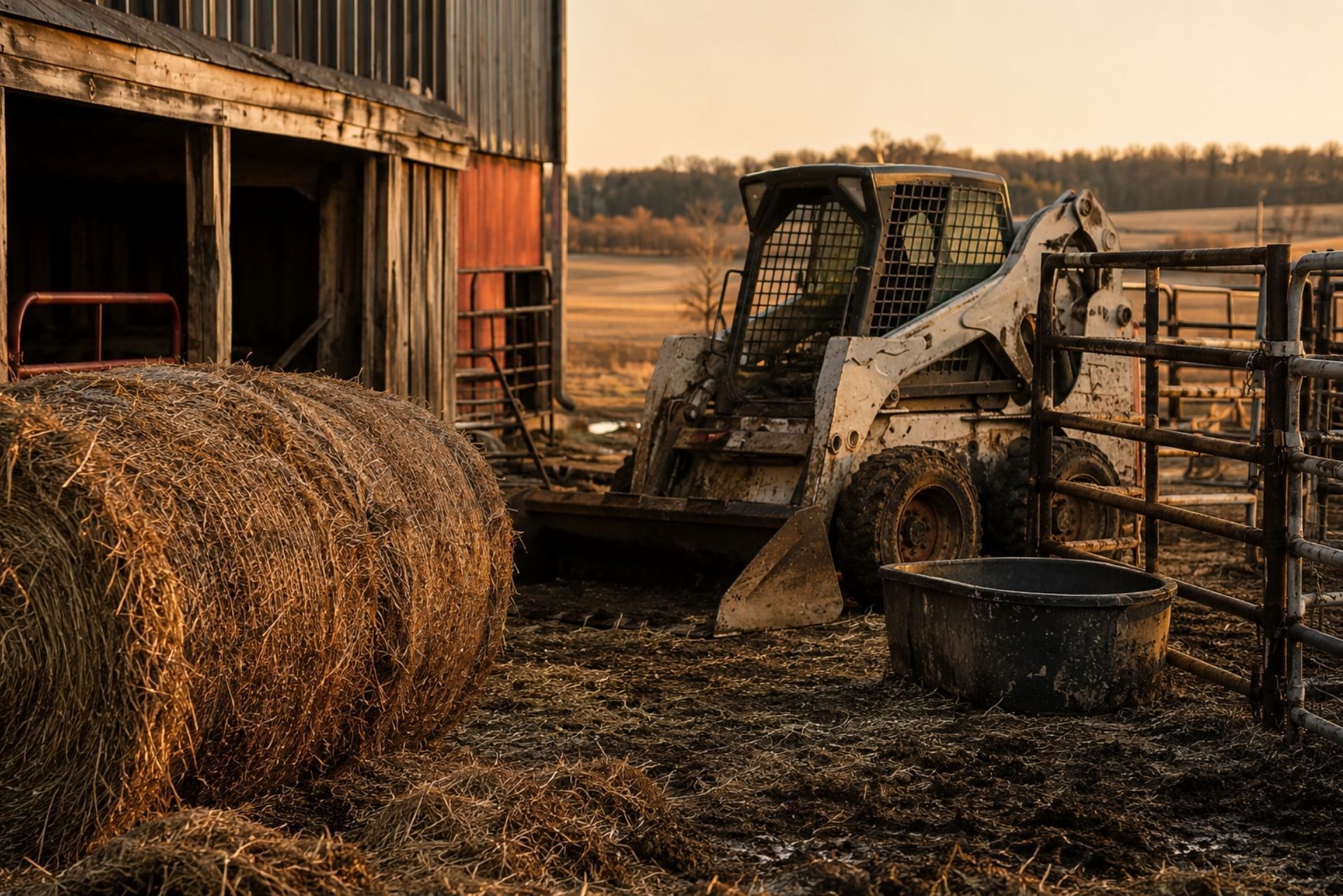
Hay fires are a real and recurring risk in Rockford. Bales stored above 20% moisture can generate enough internal heat to spontaneously combust, and once a hay fire starts, it usually takes the building with it. Your policy should cover fire loss to stored crops, but check whether it also covers the cost of monitoring and removing hot bales before they ignite: some carriers include this as a loss prevention measure, others don't.
Spoilage from roof leaks, rodent damage, or equipment failure (like a grain bin fan going out) falls into a gray area on many farm policies. Named-peril policies won't cover spoilage unless the cause is specifically listed. Broad-form policies are more forgiving, but they still have exclusions. Know which type you have before you need to file a claim.
Fencing and Peripheral Structure Coverage
Fencing is one of those farm assets that's expensive to replace but easy to overlook on a policy. A mile of five-strand barbed wire fence with steel posts runs $8,000-$12,000 to install in 2026, and most Rockford livestock operations have several miles of it. Standard farm policies often cap fence coverage at a surprisingly low number, sometimes $5,000 or $10,000 total, which won't even replace a quarter mile.
Peripheral structures like corrals, loading chutes, windbreaks, and run-in sheds face similar coverage limits. These structures take a beating from Minnesota winters and livestock pressure, and they're often excluded from the main building coverage schedule. Review your policy's "other structures" or "appurtenant structures" section carefully. If the limit seems low, ask about increasing it: the premium increase is usually modest relative to the replacement cost.
Livestock escape liability is the other side of the fencing equation. If your cattle get through a fence and cause a car accident on Highway 55 or damage a neighbor's crops, you're looking at a liability claim that could easily exceed $100,000. Your farm liability policy should cover this, but verify that the limits are adequate and that there's no exclusion for livestock on public roadways.
Comparing Basic vs. Broad Farm Property Coverage
The difference between basic and broad farm property coverage is the difference between sleeping well at night and hoping nothing unusual happens. Understanding which perils each level covers helps you decide where to spend your premium dollars.
Comparison Chart: Perils and Protection Levels
| Peril | Basic (Named Peril) | Broad Form |
|---|---|---|
| Fire and Lightning | Covered | Covered |
| Windstorm and Hail | Covered | Covered |
| Theft | Often excluded | Covered |
| Weight of Ice/Snow | Often excluded | Covered |
| Accidental Water Damage | Excluded | Covered |
| Machinery Collision | Excluded | Covered |
| Livestock Collision with Structures | Excluded | Usually covered |
| Spoilage from Mechanical Breakdown | Excluded | Sometimes covered |
| Mysterious Disappearance | Excluded | Excluded |
The broad form costs more, but it covers the kinds of losses that actually happen on working farms. A steer pushing through a barn wall, a water line freezing and flooding a shop, ice collapsing an older machine shed: these are all real claims that basic policies deny.
One important trend to watch: insurance carriers are increasingly converting roof coverage from replacement cost to actual cash value once a roof reaches 15 years. This applies to farm dwellings and outbuildings alike. If your barn has a 20-year-old roof, your payout after a hail claim might be far less than you expect. Variant Insurance Group can shop multiple carriers to find options that still offer replacement cost coverage on older roofs, which is a significant advantage of working with an independent agency.
Common Questions About Rockford Farm Insurance
FAQ: Practical Answers for Local Producers
Does my farm policy cover my house, or do I need a separate homeowners policy? Most farm policies include a dwelling coverage section that functions like homeowners insurance. If your home is on the farm property, it's usually more cost-effective to insure it under the farm policy rather than buying a separate homeowners policy.
What happens if my livestock escape and cause a traffic accident? Your farm liability coverage should respond to this claim, covering both vehicle damage and injuries. Verify that your liability limits are at least $500,000, and consider $1 million if your farm borders busy roads.
Are my farm buildings covered for replacement cost or actual cash value? It depends on the building's age, condition, and your policy type. Many carriers switch older buildings to actual cash value, which deducts depreciation from your payout. Ask your agent specifically about each structure.
Do I need separate crop insurance, or does my farm policy cover crops? Federal crop insurance (through USDA RMA) covers growing crops. Your farm policy covers harvested and stored crops. You need both to be fully protected.
Is custom farming equipment covered when it's on my property? Generally, no. Equipment owned by a custom operator is covered under their policy, not yours. Make sure any custom operator you hire carries adequate insurance, and get a certificate of insurance before they start work.
How often should I update my equipment schedule? At least annually, ideally right after you buy or sell any piece of equipment. An outdated schedule is one of the most common reasons farm claims get underpaid.
Making the Right Choice for Your Wright County Farm
Farm insurance for Rockford operations isn't a one-size-fits-all product. The Crow River creates risks that inland farms don't face, mixed operations demand flexible equipment coverage, and stored crop values swing dramatically through the year. Getting these details right is the difference between a policy that actually protects your livelihood and one that just collects premium.
Start by reviewing your current policy against the specific risks outlined here: river valley exposure, machinery scheduling gaps, stored crop valuation accuracy, fence and livestock liability limits, and dwelling coverage terms. If any of those areas feel uncertain, that's a sign your coverage needs a closer look.
Variant Insurance Group works with multiple carriers to find farm insurance that fits Wright County operations specifically. Because they're independent, they can compare how different companies handle the unique risks Rockford producers face, from flood-prone bottomland to hay storage fire protection. Reach out to their team for a policy review that addresses your operation's actual exposure, not just the standard checklist.
On this page
Variant Insurance Group is a licensed independent insurance agency serving Minnesota families and businesses.
From our office in Maple Plain, our team works with many of Minnesota's top-rated carriers so your home, auto, life, and business coverage fits your real needs. We serve families and businesses across Minnesota.

About the Author
Charlie Brookins
Founder & Agent/Owner, Variant Insurance Group
I'm Charlie Brookins, founder and owner of Variant Insurance Group. I built this agency on one idea: local people and businesses deserve honest advice and coverage that fits their real life. As an independent agent in Maple Plain, I shop many of Minnesota's top-rated carriers to find the right protection for your home, auto, life, and business, and I stay with you through every claim and change. My goal is simple: give you straight answers and coverage you can trust.
One agent, many carriers
We represent many top-rated insurance companies. You get more coverage choices, better pricing, and one point of contact for every policy you own.
01
We shop as your life changes
04
New home, new vehicle, or a growing business? We re-shop your coverage across carriers so your protection keeps pace and your rate stays fair.

Personal Insurance
Coverage for your home, auto, and life
Protection for the people and things that matter most, shopped across Minnesota's top-rated carriers.
Auto Insurance
Coverage for your car, truck, or SUV. We compare carriers to protect you on the road at a fair price.
Home Insurance
Protection for your house, your belongings, and your liability. We match you with the right coverage for your home.
Life Insurance
Support for the people who depend on you. We help you compare term and whole life options that fit your budget.
Umbrella Insurance
Extra liability protection above your home and auto limits. A strong safety net for your family and your assets.
Renters Insurance
Coverage for your belongings and liability in a rented home or apartment. Affordable protection with quick setup.
Recreational Vehicle Insurance
Coverage for boats, motorcycles, ATVs, and campers. Enjoy the season with the right protection in place.
One agent, many carriers
We represent many top-rated insurance companies. You get more coverage choices, better pricing, and one point of contact for every policy you own.
01
We shop as your life changes
04
New home, new vehicle, or a growing business? We re-shop your coverage across carriers so your protection keeps pace and your rate stays fair.

Business Insurance
Coverage that protects what you have built
Liability, property, auto, and more, shopped across Minnesota's top-rated commercial carriers.
Workers Compensation
Coverage for employee injuries and lost wages. We help Minnesota employers meet state rules and protect their crew.
Commercial General Liability
Protection against third-party injury and property damage claims. Core coverage for most Minnesota businesses.
Commercial Property
Coverage for your building, equipment, and inventory. We protect the physical assets your business depends on.
Commercial Auto
Coverage for vehicles your business owns and drives. We match trucks, vans, and fleets with the right protection.
Commercial Umbrella
Extra liability limits above your other business policies. Added protection for larger claims and contracts.
Commercial Professional Liability
Coverage for your building, equipment, and inventory. We protect the physical assets your business depends on.

One agent, many carriers
We represent many top-rated insurance companies. You get more coverage choices, better pricing, and one point of contact for every policy you own.
01
We shop as your life changes
04
New home, new vehicle, or a growing business? We re-shop your coverage across carriers so your protection keeps pace and your rate stays fair.
Industries we serve
Coverage built for your industry

Contractor Insurance
Coverage for Minnesota contractors and the trades — general liability, tools and equipment, property, and workers comp. Protection for the job site and the crew.

Apartment Complex Insurance
Your income depends on the housing you provide, and wind, fire, or flood can interrupt it. Apartment Complex Insurance helps protect your property, your liability if a tenant or worker is injured, and your personal assets.

Brewery Insurance
You have pictured this brewery for years. Whether you just make great beer or serve food and merchandise too, Variant helps Minnesota breweries find the right coverage, from startups to major production facilities.


Our carrier bench
We shop these carriers so you don't have to


Plus specialty market access through Burns & Wilcox, CRC Group, Amwins, RPS and US Assure.
One agent, many carriers
We represent many top-rated insurance companies. You get more coverage choices, better pricing, and one point of contact for every policy you own.
01
We shop as your life changes
04
New home, new vehicle, or a growing business? We re-shop your coverage across carriers so your protection keeps pace and your rate stays fair.
Four steps, one real person from start to finish.
30 seconds — name, email, phone. Or just call. We’ll ask the right questions from there.
4
We stay in your corner
In their words
What our clients say
Frequently asked questions
Your insurance questions, answered
These are the questions Minnesota families and businesses ask us most. If you don't see yours here, call or message us — a real local agent is glad to help.
What does an independent insurance agency do?
An independent agency represents many insurance companies instead of just one. We shop your coverage across those carriers and compare protection and price for you.
That means more choices and one local team for every policy. You get honest guidance and a single point of contact you can trust.
How do you find me the best rate?
We start with your details and what you need to protect. Then we compare quotes from many top-rated carriers side by side.
We explain the coverage and the cost in plain terms, so the choice is clear. As your life changes, we re-shop your policies to keep your rate fair.
Can you handle both my personal and business insurance
Yes. We cover your home, auto, and life along with your workers comp, commercial property, and commercial auto.
One team manages it all, so you make one call for every policy. That saves you time and keeps your coverage consistent.
What should I do if I need to file a claim?
Call us or contact your carrier as soon as it is safe to do so. Gather photos, notes, and any details about what happened.
Our local team walks you through each step and follows up with the carrier. We stay in your corner until the claim is resolved.
Which areas do you serve?
Our office is in Maple Plain, Minnesota, and we serve families and businesses across the state. You can visit us, call, or email.
We know the local area and the coverage Minnesota requires. [CONFIRM: list any additional licensed states.]
How do I get started?
Request a quote online or call 763-333-2533. Share a few details and we take it from there.
We shop your coverage, compare your options, and explain what fits. There is no pressure and no obligation to buy.
One agent, many carriers
We represent many top-rated insurance companies. You get more coverage choices, better pricing, and one point of contact for every policy you own.
01
We shop as your life changes
04
New home, new vehicle, or a growing business? We re-shop your coverage across carriers so your protection keeps pace and your rate stays fair.

Named an Auto-Owners Sapphire Agency — a distinction reserved for a select group of the carrier's top-performing independent agencies.
From our blog
Insurance tips for Minnesota
Practical guides on coverage for your home, auto, and business.