We compare Minnesota's top-rated insurance companies to find you strong coverage at a fair price. One local team handles your personal and business insurance.

Minnesota's weather puts homes through a stress test that most states can't match. Between ice dams creeping under shingles in January, hail pounding siding in July, and subzero temperatures threatening pipes from November through March, your homeowners insurance policy gets a real workout here. Understanding what your Minnesota homeowners policy actually covers - from dwelling protection and personal property to liability and the winter-specific perils that trip up so many policyholders - can be the difference between a smooth claim and a financial disaster. Complaints to the Minnesota Department of Commerce regarding homeowners insurance more than doubled between 2020 and 2023, a clear sign that too many homeowners are caught off guard by what their policy does and doesn't pay for. That spike isn't random: it tracks closely with several years of severe storms and the coverage disputes that followed. If you own a home anywhere in the state, from the Twin Cities suburbs to the Iron Range, knowing the fine print matters more now than it did five years ago. This guide breaks down every core coverage component and the Minnesota-specific wrinkles that make our state's policies unique.
The Core Components of a Minnesota Homeowners Policy
A standard HO-3 policy in Minnesota includes six main coverage categories. Each one protects a different piece of your financial life, and understanding how they work together is essential before you file a claim or, better yet, before you ever need to.
Dwelling and Other Structures Coverage
Dwelling coverage (Coverage A) pays to repair or rebuild your home's physical structure: walls, roof, foundation, built-in appliances, and attached garage. Your policy limit should reflect the full cost to rebuild your home at current construction prices, not your home's market value or what you paid for it. In 2026, construction costs in the Minneapolis-St. Paul metro remain elevated compared to pre-pandemic levels, so reviewing your dwelling limit annually is critical.
Other structures coverage (Coverage B) protects detached buildings on your property: think detached garages, sheds, fences, and pole barns. Most policies set this at
10% of your dwelling coverage amount, so a $400,000 dwelling limit gives you $40,000 for other structures. If you have a large detached workshop or a guest cabin on your lake property, that default percentage might not be enough, and you'd want to increase it through an endorsement.
Personal Property and Loss of Use
Personal property coverage (Coverage C) protects your belongings: furniture, clothing, electronics, sporting equipment, and more. Standard policies typically cover personal property at 50-70% of your dwelling limit. One thing to keep in mind is that certain high-value items like jewelry, firearms, and collectibles have sub-limits (often $1,500-$2,500 per category), so you may need a scheduled personal property endorsement for expensive items.
Loss of use coverage (Coverage D) kicks in when your home becomes uninhabitable due to a covered loss. It pays for temporary housing, restaurant meals above your normal food budget, and other increased living expenses. In Minnesota, this matters a lot: a serious ice dam or burst pipe in February can make a home unlivable for weeks or even months during the worst possible time to be displaced. Most policies cap loss of use at 20% of your dwelling coverage.
Personal Liability and Medical Payments
Liability coverage (Coverage E) protects you if someone is injured on your property or if you accidentally damage someone else's property. Standard policies start at $100,000, but most insurance professionals recommend at least $300,000-$500,000. A slip on an icy sidewalk leading to a broken hip can easily generate medical bills and legal fees exceeding $100,000.
Medical payments coverage (Coverage F) is smaller, usually $1,000-$5,000, and pays for minor injuries to guests regardless of fault. If a neighbor's kid trips on your porch steps and needs stitches, this coverage handles it without a lawsuit. It's a goodwill provision that keeps small incidents from becoming big problems.
Minnesota Winter Perils: Ice Dams, Frozen Pipes, and Weight of Snow
Minnesota's winter creates a set of insurance challenges that homeowners in warmer states simply don't face. The way your policy handles these perils varies significantly depending on your carrier, your endorsements, and how well you've maintained your home.
Navigating Ice Dam Coverage Limits
Ice dams form when heat escaping through your roof melts snow, which refreezes at the eaves and forces water under your shingles. The resulting water damage to ceilings, walls, and insulation is generally covered under a standard policy. The catch is that many carriers now impose specific ice dam sub-limits or higher deductibles, especially after the costly claim years of 2022-2024.
Your policy will typically pay for interior water damage caused by ice dams, but it won't cover the cost of removing the ice dam itself or replacing gutters damaged by ice buildup. Gutter damage from ice is
usually classified as a maintenance issue rather than a sudden loss. Prevention - proper attic insulation, adequate ventilation, and heat cables along the eaves - is your best defense, both for your home and your claim history.
Burst Pipes and Sudden Water Damage
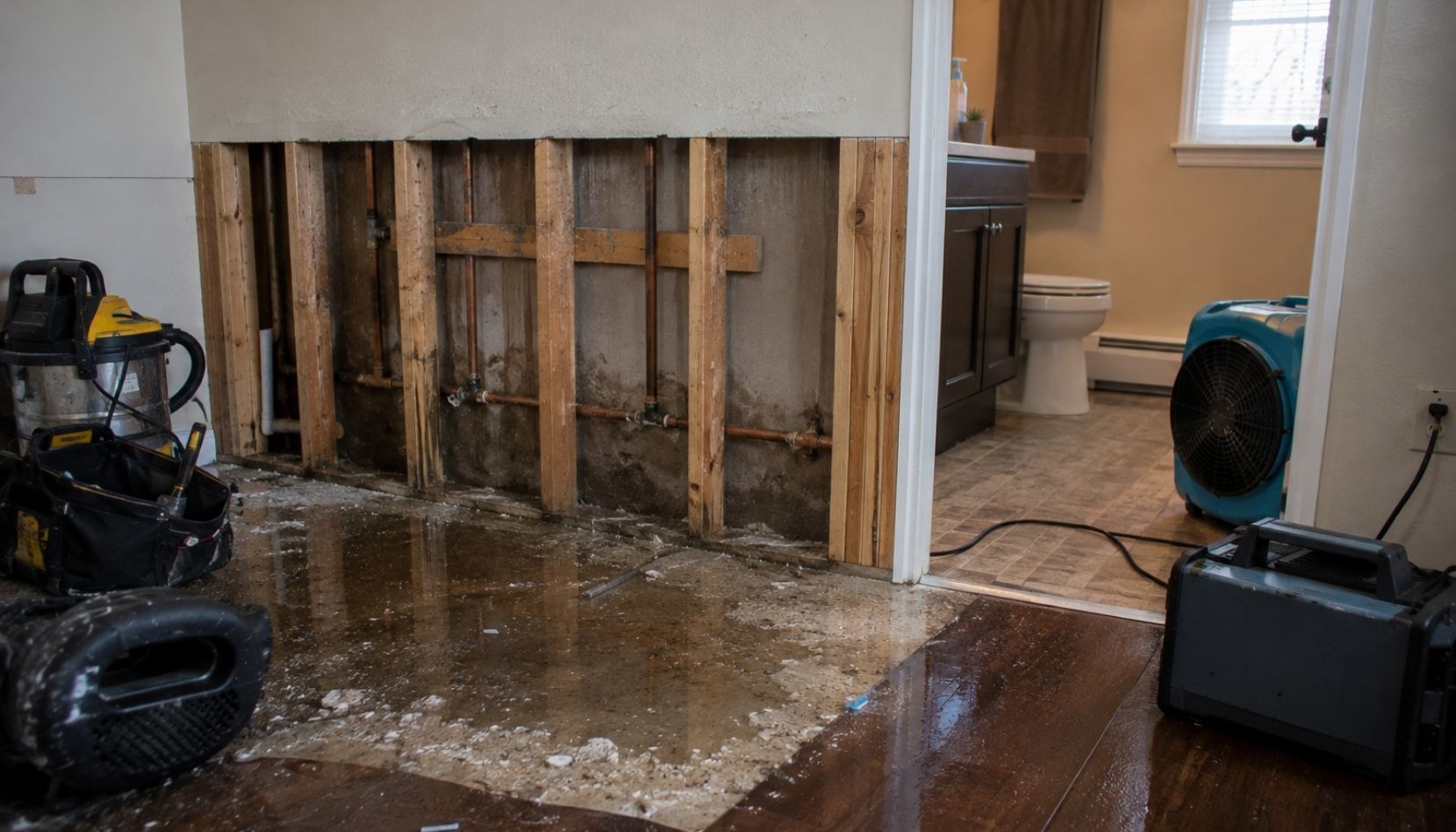
Frozen pipes that burst are covered under most Minnesota homeowners policies, but there's an important condition: you must have taken reasonable steps to maintain heat in your home or shut off the water supply if the home was vacant. If you leave for a two-week vacation in January without arranging for someone to check on the house or without draining the pipes, your insurer may deny the claim.
Sudden and accidental water damage from burst pipes is treated differently than gradual leaks. A pipe that freezes and ruptures overnight, flooding your basement, is a covered peril. A pipe that's been slowly dripping behind a wall for months is typically excluded as a maintenance failure. Snow and ice-related claims represent a significant portion of Minnesota homeowners insurance payouts each winter, which is why carriers scrutinize these claims closely.
Understanding Your Coverage: Replacement Cost vs. Actual Cash Value
This distinction affects how much money you actually receive after a claim, and it's one of the most misunderstood parts of any policy. Replacement cost coverage pays to repair or replace damaged property with new materials of similar quality, without deducting for depreciation. Actual cash value (ACV) pays the depreciated value: what your 12-year-old roof or 8-year-old couch is worth today, not what it costs to replace.
The difference can be enormous. A roof that costs $18,000 to replace might have an ACV of only $6,000 if it was nearing the end of its useful life. Many Minnesota carriers have shifted to ACV for roofs over a certain age (often 15-20 years), even on policies that are otherwise replacement cost. This trend accelerated after severe summer storms drove up claim costs statewide, and it's something every homeowner should verify before storm season.
An independent agency like Variant Insurance Group can compare how different carriers handle replacement cost versus ACV on roofing, which is especially valuable if your roof is approaching that age threshold where policies start to diverge.
Comparison: Standard Coverage vs. Common Minnesota Endorsements
| Coverage Area | Standard HO-3 Policy | With Common Endorsements |
|---|---|---|
| Water/Sewer Backup | Not covered | Covered (typically $5,000-$25,000 limit) |
| Extended Replacement Cost | Pays up to dwelling limit | Pays 25-50% above dwelling limit |
| Scheduled Personal Property | Sub-limits on valuables ($1,500-$2,500) | Full appraised value, broader perils |
| Service Line Coverage | Not covered | Covers underground pipes/wires ($10,000+) |
| Roof Coverage (15+ years) | Often ACV only | Replacement cost endorsement available with some carriers |
| Equipment Breakdown | Not covered | Covers HVAC, water heater, electrical panel failures |
| Identity Theft | Not covered | Expense reimbursement ($15,000-$25,000) |
The endorsements that matter most in Minnesota are water/sewer backup (basement flooding is extremely common) and extended replacement cost (construction costs can spike after widespread storm damage when contractors are in high demand). Working with a local agent who understands which endorsements are worth the premium and which are unnecessary for your specific situation saves both money and headaches.
Common Questions About Minnesota Home Insurance
FAQ: Does my policy cover damage from a heavy snowstorm?
Yes, most standard policies cover damage caused by the weight of ice, snow, or sleet, including roof collapse or structural damage.
Wind-driven snow that enters through a damaged roof is also typically covered. Cosmetic snow damage or snow removal costs are generally your responsibility.
FAQ: Are sewer backups covered by a standard policy?
No. Sewer and drain backup is excluded from standard HO-3 policies. You need a separate endorsement, which typically costs $40-$80 per year and provides $5,000-$25,000 in coverage. Given Minnesota's aging sewer infrastructure and spring thaw conditions, this endorsement is practically essential.
FAQ: How does a separate wind and hail deductible work?
Some Minnesota policies now carry a percentage-based wind/hail deductible (often 1-2% of your dwelling coverage) instead of a flat dollar amount. On a $350,000 home, a 2% wind/hail deductible means you'd pay $7,000 out of pocket before coverage kicks in. Check your declarations page carefully: this is where many homeowners get surprised after a hailstorm.
FAQ: Is my detached garage covered if a tree falls on it?
Yes. Your other structures coverage (Coverage B) pays for damage to detached garages from covered perils, including falling trees. The policy also typically covers the cost of removing the tree. If the tree falls but doesn't damage any structure, removal costs are usually limited to $500-$1,000 per tree.
FAQ: Does insurance pay for a hotel if my pipes freeze and I can't stay home?
Yes, if burst pipes make your home uninhabitable, your loss of use coverage pays for reasonable hotel costs, meals, and other additional living expenses while repairs are made. Keep all receipts, and notify your insurer immediately so they can help coordinate temporary housing.
The Bottom Line for North Star State Homeowners
Minnesota homeowners insurance covers a lot, but the details matter more here than in most states. Winter perils like ice dams, frozen pipes, and snow load create claim scenarios that standard policies handle inconsistently across carriers. The shift toward ACV roof coverage, percentage-based wind/hail deductibles, and ice dam sub-limits means your policy from five years ago may look very different from what you're carrying today.
Review your declarations page at least once a year. Pay attention to your deductible structure, your roof coverage type, and whether you have endorsements for water backup and extended replacement cost. These are the gaps that generate the most regret after a loss.
Variant Insurance Group shops multiple carriers specifically to find policies that address Minnesota's unique risks without leaving you exposed. A 20-minute conversation with a local agent who understands the difference between how Company A and Company B handle ice dam claims can save you thousands when it counts. Reach out for a policy review before the next storm season hits.

About the Author
Charlie Brookins
Founder & Agent/Owner, Variant Insurance Group
I'm Charlie Brookins, founder and owner of Variant Insurance Group. I built this agency on one idea: local people and businesses deserve honest advice and coverage that fits their real life. As an independent agent in Maple Plain, I shop many of Minnesota's top-rated carriers to find the right protection for your home, auto, life, and business, and I stay with you through every claim and change. My goal is simple: give you straight answers and coverage you can trust.
Recent Posts